

There Oughta Be a [New] Law

Friday, March 13, 2026
Weekly Digest
There Oughta Be a [New] Law
You’re reading the Benton Institute for Broadband & Society’s Weekly Digest, a recap of the biggest (or most overlooked) broadband stories of the week. The digest is delivered via e-mail each Friday.
Round-Up for the Week of March 9-13

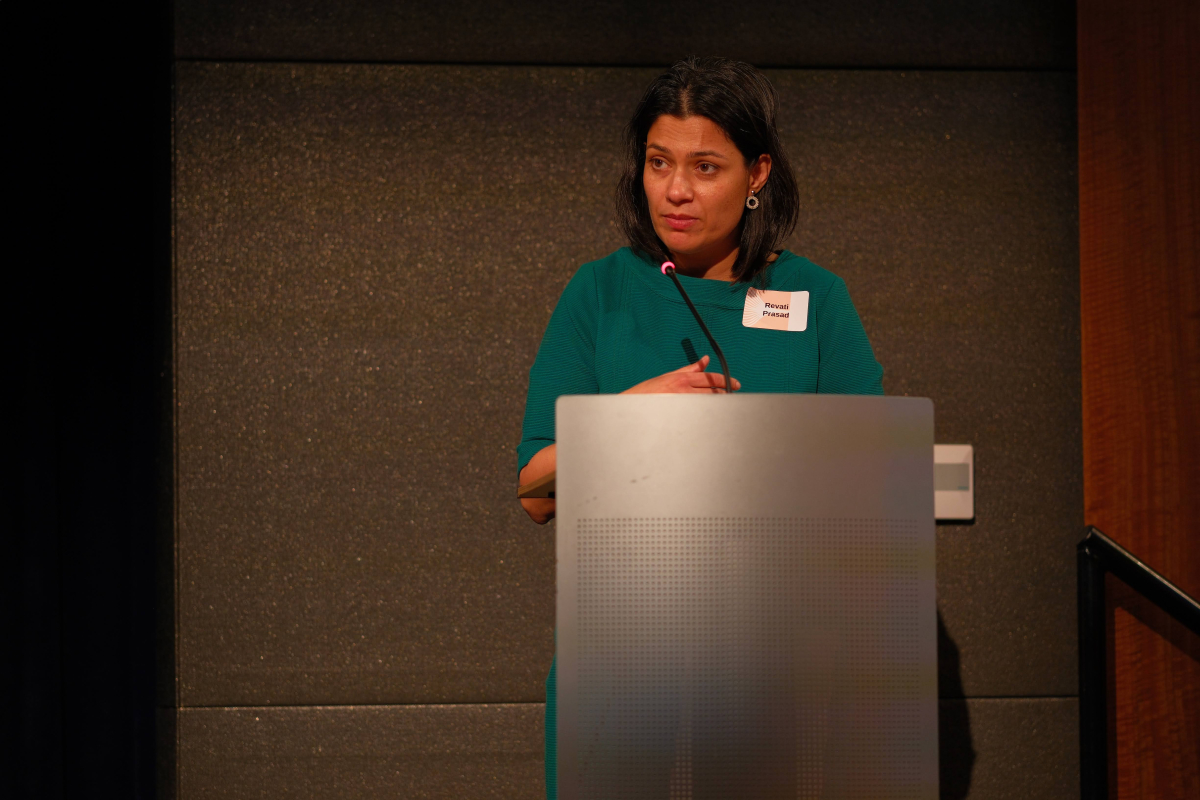
Thank you all for an extraordinary day. To our speakers, our moderators, and to everyone here who brought such care, urgency, and insight to this conversation, thank you.
I want to close by reflecting on what we heard, because the arc of today tells a story.
We began with Senator Markey reminding us that universal service was never a narrow technical objective. It was, and remains, a moral and democratic claim.
Access to education, economic opportunity, civic participation must be available to everyone, regardless of geography, income, age, or background. That is what we are really talking about when we talk about universal connectivity. The means of participation. The connective tissue of society.
We should not think of connectivity as a gift, or charity, or even a subsidy. The internet was built on public investment, on DARPA research, on NSF grants, on spectrum licensed from the public airwaves, on rights-of-way granted across public land. I think of universal connectivity as one way to ensure that the value created with public resources and on public infrastructure accrues to the public.
Then we heard the story of the law itself. It is worth pausing to appreciate how extraordinary that is.
They passed a law.
A wildly bipartisan law.
A law that looked to the future, and did not lose sight of the public interest.
Not because everyone agreed on everything, but because there was a shared recognition that communications infrastructure was too important to be left to chance.
If there is a lesson for us now, it is not nostalgia; it is possibility. This was a bipartisan issue and should be one today.
And then we turned to implementation, where we were reminded that the devil is always in the details. That conversation could not be more timely. We are on the brink of the largest broadband deployments in our history. The work right now is to guarantee that the institutions and the people charged with carrying those deployments out have what they need to succeed.
Finally, we asked a forward-looking question: Do the conditions of today mirror those of the mid-1990s, making new reforms possible? What regulatory tools do we have to address the challenges of this new communications environment?
In that conversation, Gigi Sohn and Ambassador Phil Verveer reminded us that the Telecommunications Act of 1996 did not appear out of thin air. It was the product of structural pressures that had been building for years, the recognition that the system that emerged from the breakup of AT&T was no longer sustainable, and that Congress needed to create a new framework to govern communications in the public interest. And it did.
 Congress created a framework—imperfect, evolving, sometimes contentious—that gave regulators, policymakers, and the public the tools to keep moving forward.
Today, we face a different technological landscape, but many of the underlying questions feel familiar. What I heard over and over again today was, why there oughta be a law, or a new agency, or an independent commission.
It is hard not to be ambivalent about the modern internet. It fragments our attention. It can be extractive and exploitative. It, what’s the word… sucks.
I imagine we have all, at some point, thought that we were all better off before, that the internet corrodes attention and community and civic life. That is not wrong as a cultural observation. But it is a critique that can be taken seriously only by people for whom connectivity is already a given. The option to refuse has to exist before the refusal can be meaningful.
Yes, the river is polluted, but people still need drinking water. And people do need connectivity.
The internet is not optional infrastructure anymore. It is the substrate through which political voice, economic opportunity, healthcare, education, and civic life increasingly operate. Being offline in 2026 is not simply about being inconvenienced. It is to be structurally excluded from labor markets that have moved online, from government services that require digital interfaces, from the medical literature, the job boards, the financial tools, and the civic forums.
Thinking about what else has changed in 30 years, we also have to acknowledge that connectivity is not binary—it is a spectrum. A person sharing a phone with a shattered screen and spotty service is not connected in any meaningful sense when compared to a person with reliable broadband, a capable device, and the digital literacy to use it.
Connectivity has to be more universal—and more comprehensive and more meaningful. A map that shows broadband availability at an address says nothing about whether a family in that home can afford to subscribe, has a device capable of modern tasks, or employs the skills to navigate the internet. We must address not just whether a connection technically exists, but whether it is fast enough to be useful, affordable enough to be sustainable, and whether users possess the literacy and the devices to use it effectively. And that internet needs to be safer, kinder, healthier, better. The the river needs to be cleaned up and the water must be safe to drink.
That is the work ahead of us in the months and years to come, and it is work we want to do in partnership with all of you.
On September 24th, we will reconvene here to focus on what has changed, in technology, in the industry, and in government. And we’ll ask what those changes require of broadband policy going forward.
What we need now is not a return to the specific mechanisms of 1996—which were built for a different technological era—but a renewed commitment to the principles that animated the law: in a democratic society, the infrastructure for telecommunications and participation must never be a privilege reserved for some, but a right shared by all.
Your assignment is this: talk about today, about what universal service could mean for the next 30 years, and bring the best thinking—the best thinkers—with you when we reconvene in September.
Thank you.
Quick Bits
- House Commerce Committee Democrats Press NTIA Administrator on BEAD Funding Updates
- Statement by Assistant Secretary Roth on NTIA’s Approach to the Use of the $21 Billion BEAD Savings
- Arielle Roth: Information Superhighway to Nowhere
- Senators Urge FCC to Preserve Critical Broadband Service That Boosts Rural and Tribal Broadband, Promotes Military Readiness, and Supports American Manufacturing
Weekend Reads
- The Role of State Broadband Policy in 2026
- Universal Service – Sustainability and Business Cases for Rural Connectivity
- Bridging the Broadband Health Gap
- Key findings about how Americans view artificial intelligence
- How Americans view data centers’ impact in key areas, from the environment to jobs
ICYMI from Benton
- The Promise of Universal Service in the Telecommunications Act of 1996
- The Gigi and the GOAT: From Breaking Up AT&T to Harnessing AI (Zoe Walker)
- Telecom Act at 30: Act into Action, and Unfinished Business (Grace Tepper)
- Telecom Act at 30: What It Got Right, and What Work Remains (Zoe Walker)
- Universal Service in Action (Sen Ed Markey)
- Making Good on the Promise of Universal Service (Dr. Revati Prasad)
- Thirty Years After the Telecommunications Act, We’re Still Working to Realize the Promise of Universal Service (Dr. Revati Prasad)
- Revisiting the Themes Underlying the Telecommunications Act of 1996 (John Windhausen Jr.)
- History Lessons (Former FCC Chairman Reed Hundt)
Upcoming Events
Mar 17––U.S. Leadership at the World Radiocommunication Conference 2027 (Senate Commerce Committee)
Mar 17––30th Anniversary of the 96 Act: What Did We Learn? (Federal Communications Commission)
Mar 18––The Telecom Act at 30 (Technology Policy Institute)
Mar 18––Liability or Deniability? Platform Power as Section 230 Turns 30 (Senate Commerce Committee)
Mar 18––Securing U.S. Leadership of Communications Technology (House Commerce Committee)
Mar 23––Public Wireless Supply Chain Innovation Fund Listening Session (NTIA)
Mar 26––March 2026 Open Federal Communications Commission Meeting (Federal Communications Commission)
The Benton Institute for Broadband & Society is a non-profit organization dedicated to ensuring that all people in the U.S. have access to competitive, High-Performance Broadband regardless of where they live or who they are. We believe communication policy - rooted in the values of access, equity, and diversity - has the power to deliver new opportunities and strengthen communities.
© Benton Institute for Broadband & Society 2026. Redistribution of this email publication - both internally and externally - is encouraged if it includes this copyright statement.
For subscribe/unsubscribe info, please email headlinesATbentonDOTorg

Kevin Taglang
Executive Editor, Communications-related Headlines
Benton Institute
for Broadband & Society
1041 Ridge Rd, Unit 214
Wilmette, IL 60091
847-220-4531
headlines AT benton DOT org
Share this edition:


Broadband Delivers Opportunities and Strengthens Communities