

The Supreme Court Lifts A Cloud That Hung Over USF

Monday, July 7, 2025
Digital Beat
The Supreme Court Lifts A Cloud That Hung Over USF
The Benton Institute for Broadband & Society and its public interest allies have reason to celebrate an unambiguous victory at the U.S. Supreme Court. On June 27, in FCC v. Consumers Research, Justice Elena Kagan, joined by five colleagues, decisively rejected arguments that the Universal Service Fund (USF) established under the Communications Act is an unconstitutional delegation of Congressional authority to the Federal Communications Commission (FCC). The decision also upheld the constitutionality of the FCC’s establishment of a quasi-public organization, the Universal Service Administrative Company (USAC), to administer the fund on a day-to-day basis.
The Supreme Court actually resolved two cases brought in companion petitions for certiorari. The first was filed by the FCC and the United States government. The Benton Institute and three other public interest groups (the Schools, Health & Libraries Coalition, the National Digital Inclusion Alliance and MediaJustice), along with several telecommunications industry trade associations, which had collectively intervened in the cases in support of the government, also filed for certiorari, each asking the Supreme Court to agree to hear the cases.
General Background
The USF currently funds four programs:
- Lifeline, which offers a monthly benefit of up to $9.25 towards phone or internet services for eligible low-income subscribers (up to $34.25 for those living on Tribal lands).
- The Schools and Libraries program, known popularly as the E-Rate, provides discounts to eligible schools and libraries for telecommunications and internet access.
- The High Cost program provides support through more than a dozen separate legacy and modernized funds to eligible telecommunications carriers (ETCs) to deliver affordable voice and broadband service in rural areas that would otherwise be unserved or underserved. The legacy funds support voice service and the modernized funds that make up the Connect America Fund (CAF) program are bringing broadband to rural America.
- The Rural Health Care Program provides funding to eligible to hospitals, rural health clinics, and community health centers so they can better afford telecommunications and broadband services. This program aims to improve healthcare access and quality in rural communities by ensuring that providers can utilize telehealth technologies and access essential data communication services.
USF is funded by fees collected from telecommunications carriers that provide voice telephone service. The carriers typically pass on these costs to their customers. The total annual expenses of the USF have remained relatively stable in recent years (~$8 billion/year) as the number of voice service lines has decreased. So, the USF fee collected each calendar quarter from each customer (the “contribution factor”) has steadily increased to 35 percent or more of each monthly bill. This did not directly affect the outcome of the Supreme Court decision but, more importantly, poses a policy challenge, as the increasing contribution factor is generally considered to be unsustainable.
Although the U.S. Courts of Appeals for the Sixth and Eleventh Circuit, and a panel of the U.S. Court of Appeals for the Fifth Circuit rejected identical challenges to the USF from the same parties, sitting en banc, the full membership of the Fifth Circuit held that Section 254 of the Communications Act, established by Congress in 1996 as the legal basis for creating the USF and USAC, represents an unconstitutionally excessive delegation of Congressional power.
Since most readers will be primarily interested in the impact of this decision, I start by explaining how the holding will affect the four USF programs. I then discuss the decision as well as the history and broader significance of the case.
Impact of the Decision
In one sense, the effect of the decision is nothing. Having been validated by the Supreme Court, the USF will continue to function as before. However, as noted above, there is a broad consensus that the ever-escalating USF contribution factor is unsustainable, and that legislative changes to the USF are needed. However, the pendency of the Consumers Research litigation over the past four years has been an insurmountable obstacle to Congressional action. Ironically, had the court ruled the other way, immediate legislation would have been needed to restore these critical programs. Legislation in the wake of such a decision would likely have been quite unsavory to advocates of broadband expansion. However, now that the shape of the USF has been blessed, there is less pressure on Congress to move quickly, and it is highly unlikely that any USF reform measures will be enacted in the current Congressional session.
Although legislation will not be immediately forthcoming, it is reasonable to expect that discussion of USF reform provisions will ramp up. A bipartisan, bicameral Congressional Universal Service Fund (USF) Working Group established two years ago recently relaunched and is expected to ramp up its consideration of various proposals to diversify the funding of the USF from sources such as an online advertising tax, assessing “edge providers” such as Facebook and Google, and/or internet service providers. (Support for direct funding of USF under the annual Congressional appropriations process has faded in the face of broad opposition.) Congress is also likely to review proposals to modify the four existing programs and, possibly, to establish new ones.
History of the Consumers Research Litigation
For several decades, conservative activists and legal scholars have pressed for the Supreme Court to revisit its New Deal era precedents governing the scope of authority that Congress can confer on the executive branch and independent agencies like the FCC. Those cases established the principle that Congressional grants were permissible so long as they established an “intelligible principle” by which the legislation can be measured. Opponents of these cases have come to believe that expansive legislation helped create the so-called “administrative state” that allowed many excesses of government power. Conservative legal scholars came to refer to what they, not the Supreme Court, called the “non-delegation doctrine.”
Consumers Research, which operated for many years as the publisher of a magazine that rivaled Consumer Reports in providing product reviews and consumer guidance, has in recent years been employed as a vehicle to promote conservative political objectives and to bring litigation to promote such goals. Believing that the USF program violated the non-delegation doctrine by improperly delegating Congressional taxing authority to the FCC, starting in the fourth quarter of 2021, Consumers Research, joined by a tiny telecommunications provider (which may now be dormant), and several individual consumers, appealed the issuance of each successive quarterly contribution factor promulgated by the FCC. They brought these cases to several conservative circuit courts of appeal. Their ultimate success in obtaining a favorable ruling from the en banc Fifth Circuit created a “circuit split,” making review by the Supreme Court to resolve the conflict a near certainty. About a year ago, the Court agreed to hear the two companion cases.
What the Supreme Court Held
The vote to reverse the Fifth Circuit was 6-3, with all six Justices in the majority agreeing to join Justice Kagan’s decision in full. While it seemed possible that the Court might have modified the non-delegation precedent and then evaluated the USF under such a new standard, that scenario might have resulted in some or all of the USF being declared unconstitutional. Instead, the Justices reaffirmed the longstanding “intelligible principle” standard, effectively closing the door on future efforts to overrule it. The Court also held that the creation of USAC was not a violation of what has been called the “private non-delegation doctrine,” finding that the FCC exercises firm control over USAC’s functions. After concluding that the delegation to the FCC and the sub-delegation to USAC were permissible, the decision also reversed the Fifth Circuit’s rather unorthodox holding that even if those provisions separately passed constitutional muster, they nonetheless violated the Constitution “in combination.”
Justice Kavanaugh issued an interesting concurring statement. He stressed that he agreed with Justice Kagan’s decision in its entirety, but added that, in his often-expressed view, bipartisan multimember agencies like the FCC are not truly independent, and must follow the dictates of the President. Were that not to prove to be the case, Justice Kavanaugh mused that he might have ruled differently. Since it is widely expected that within the next year or two, the Supreme Court will adopt Justice Kavanaugh’s position, this observation may soon become inconsequential.
Justice Kavanaugh’s separate statement also hinted at a possible reason that six members of the Court were comfortable with the outcome. He pointed out that in light of the Court’s recent decisions to overrule the Chevron Doctrine and to prohibit agencies from resolving “major questions” by relying on broad interpretations of Congressional statutes, the policy concerns underlying efforts to expand the non-delegation doctrine have been “substantially mitigated.” His discussion of “major questions” also hinted that, at least in his view, the USF case applies only “in the domestic sphere.” This possible limitation is of no relevance to the USF, but it may well signal his view about the President’s tariff authority, as to which a lower court had held such decisions to violate the “major questions” doctrine.
Justice Gorsuch, joined by Justices Thomas and Alito, dissented. While the majority said that dubbing the USF contribution as a “tax” or a “fee” was of no decisional consequence, he argued that this is a tax, and that Congress may not delegate taxing authority to another branch of government. He also criticized the majority for concluding that Congress’ use of “qualitative” criteria for determining the size of the USF program rather than setting a “quantitative” numerical limit was impermissibly vague. He also explained why he thinks the “intelligible principle” standard is unworkable and should be abandoned. Finally, he castigated the creation of USAC, arguing that it is not subject to adequate FCC control.
Conclusion
This has been a fight that the Benton Institute for Broadband & Society and its cohorts did not start, and did not need. While it has resulted in a clean-cut victory and vindication of the USF, the litigation has represented a significant drain on resources for the public interest community and the FCC. Moreover, the uncertainty generated by the case has been a significant problem for the field. The good news, such as it is, is that interested parties can now focus on improving the USF’s operations and on addressing the need for future legislative reform.
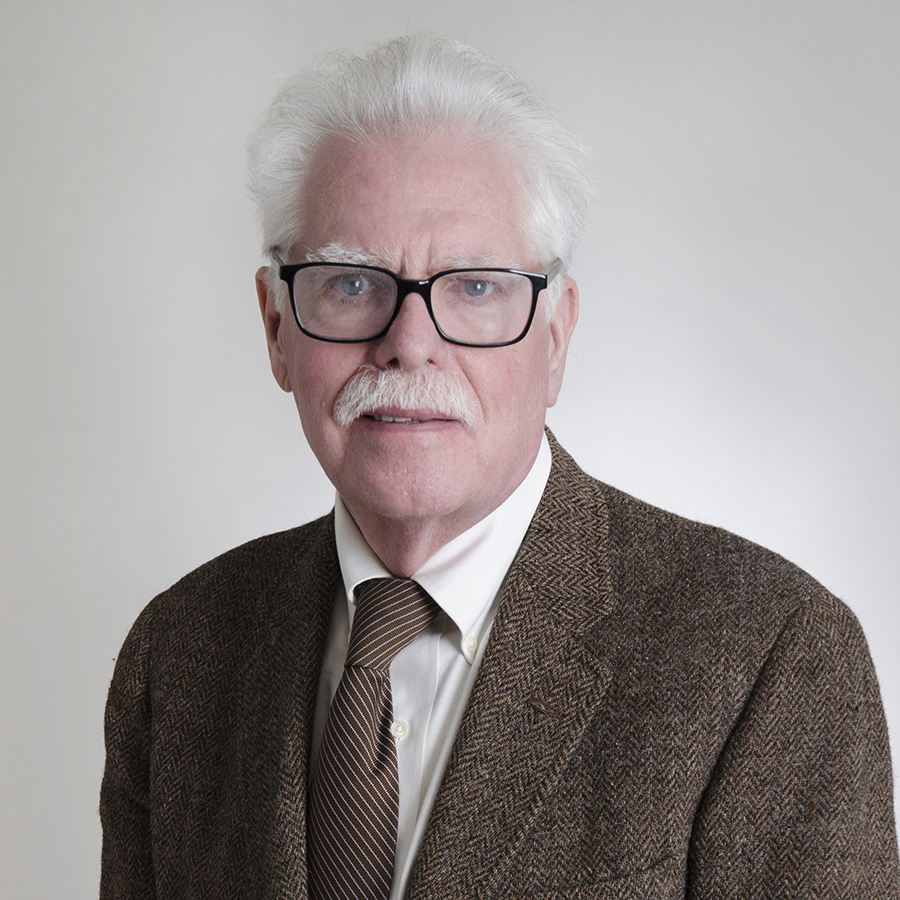
Andrew Jay Schwartzman is Benton Senior Counselor. He has represented the Benton Institute for Broadband & Society , the National Digital Inclusion Alliance, and MediaJustice throughout this litigation.
The Benton Institute for Broadband & Society is a non-profit organization dedicated to ensuring that all people in the U.S. have access to competitive, High-Performance Broadband regardless of where they live or who they are. We believe communication policy - rooted in the values of access, equity, and diversity - has the power to deliver new opportunities and strengthen communities.
© Benton Institute for Broadband & Society 2025. Redistribution of this email publication - both internally and externally - is encouraged if it includes this copyright statement.
For subscribe/unsubscribe info, please email headlinesATbentonDOTorg

Kevin Taglang
Executive Editor, Communications-related Headlines
Benton Institute
for Broadband & Society
1041 Ridge Rd, Unit 214
Wilmette, IL 60091
847-220-4531
headlines AT benton DOT org
Share this edition:


Broadband Delivers Opportunities and Strengthens Communities