

Libraries
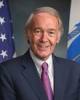
Sen Markey Celebrates 30 Years of E-Rate Program That Keeps Communities Connected
Thirty years ago, when I created the E-Rate program, I believed deeply that access to information and opportunity should never depend on a child’s zip code or family income. E-Rate was built on a simple idea: if we connect every school and every library to the digital world, we can unlock the full potential of every student. For three decades, E-Rate has delivered on that promise, connecting classrooms, libraries, and communities in Massachusetts and across the United States.

History Rhymes: 1996 Telecommunications Act and Artificial Intelligence
This essay examines how the national government’s strategy three decades ago shaped the global information environment of today. This will show that humans can use the power of government to do more good than harm. They can win and deserve the trust of the people they are sworn to serve. It is also intended to explain why the lessons of the grand strategy adopted for digital communications three decades ago suggest it is time to create an Artificial Intelligence Commission.

Federal Universal Service Support Mechanisms Fund Size Projections for Second Quarter 2026
The Universal Service Administrative Company (USAC) submitted the federal Universal Service Support Mechanisms fund size and administrative cost projections for the second quarter of calendar year 2026 (2Q2026). USAC projects a consolidated budget of $65.67 million for 2Q2026. Direct costs for all support mechanisms total $33.88 million.

GAO finds E-Rate Program uses best practices to prevent fraud, waste, and abuse
The Government Accountability Office identified nine requirements and leading practices to oversee and prevent fraud, waste, and abuse in awards, including grants, contracts, and loans. Of the five programs reviewed, only the Federal Communications Commission’s Universal Service Program for Schools and Libraries (E-Rate) had documented procedures for all nine. The nine requirements include:
Chairman Carr Names Seven Members to the Board of Directors of the Universal Service Administrative Company
Federal Communications Commission Chairman Brendan Carr appointed seven members to the Board of Directors of the Universal Service Administrative Company (USAC). Each position has a three-year term beginning on January 1, 2026, and ending on December 31, 2028.

E-rate Trends Report
Now in its 15th year, the E-rate Trends Survey continues to document the evolving role of broadband in education. Since the 2015 Modernization, we’ve maintained a consistent set of survey questions, allowing a decade-long analysis of progress and persistent challenges in connecting every student and library to reliable, high-speed internet. Trends in affordability, administrative ease, and service eligibility paint a picture of steady progress paired with persistent challenges.
Federal Universal Service Support Mechanisms Quarterly Contribution Base for the First Quarter 2026
The Universal Service Administrative Company (USAC) submitted the contribution base amount to be used for the first quarter of calendar year 2026 (1Q2026). The total projected collected interstate and international end-user revenue base to determine the contribution factor for the Universal Service support mechanisms for 1Q2026 is $7,604,470,744. This amount was derived using the projected collected revenue reported on the FCC Form 499-Q submissions.
Mission Telecom Matches FCC E-Rate Cuts to Safeguard Affordable Wi-Fi for Schools and Libraries
Mission Telecom, a nonprofit telecommunications provider and grantmaker dedicated to expanding digital equity, today announced a new offer to help schools and libraries remain whole after losing federal E-Rate funding for Wi-Fi hotspots and school bus connectivity.
Massachusetts Launches $23 Million Device Distribution Program to Address Digital Divide
The Healey-Driscoll administration and Massachusetts Technology Collaborative’s (MassTech) Massachusetts Broadband Institute (MBI) launched the Connected & Online Program, a $23 million initiative to close the digital device gap across Massachusetts.

FCC Reverses Expansion of COVID-Era Wi-Fi Hotspots Program
The Federal Communications Commission granted a petition for reconsideration filed by Maurine and Matthew Molak and found that the best reading of section 254 of the Communications Act of 1934, as amended, (the Communications Act) is that it does not permit funding of off-premises use of Wi-Fi hotspots and the associated wireless Internet services with E-Rate program support. In so finding, the FCC rescinded the rules adopted in July 2024.