

Censorship
Ranking Member Thompson Launches Investigation Into Social Media and Tech Corporations Receiving Subpoenas From DHS On Americans' First Amendment Activity
Reps. Bennie G. Thompson (D-MS), Lou Correa (D-CA), and Rep.
Remarks of Assistant Secretary Arielle Roth at The Media Institute Communications Forum Luncheon Series
In the 250 years since our founding, technology has repeatedly transformed speech—from the printing press to radio, from the telegraph to the telephone, and from the television to the global internet. Every major advancement in communications technology has shifted who holds power over speech. In our current age, that increasingly means that whoever controls communications technology controls the boundaries of free expression.
The splinternet: how online shutdowns are getting cheaper and easier to impose
What Iran has, a splinternet, is becoming reality for many millions of people. It is likely to get far worse. More than half of Russia’s regions are able to access only a limited, government-approved version of the internet through their mobile phones. The “great firewall of China” blocks most of the global internet, including sites such as Google and the Guardian.
State Department bars five Europeans it says pressured tech firms to censor American viewpoints online
The State Department is barring five Europeans it accused of leading efforts to pressure U.S.
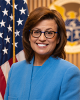
Commissioner Gomez on Editorial Interference at 60 Minutes
Against the backdrop of increased government pressure, reports that CBS News interfered with the editorial judgment of 60 Minutes are deeply alarming and strike at the heart of press freedom. When the FCC withheld approval of Paramount’s transaction to extract sweeping concessions, I warned that allowing the government to wield regulatory leverage in newsroom decision-making would inevitably threaten independent journalism. We are now seeing the real-world consequences of blurring the line between regulatory authority and editorial independence.

The FCC’s News Distortion Policy should be rescinded
Andrew C. Barrett, Rachelle B. Chong, Ervin S. Duggan, Mark S. Fowler, Dennis R. Patrick, Alfred C. Sikes, Thomas E. Wheeler, Christopher J. Wright, Kathryn C. Brown, Jerald N. Fritz, Peter Pitsch (the petitioners) request that the Federal Communications Commission repeal the news distortion policy in full. In Moody v. NetChoice, LLC, the Supreme Court, applying the First Amendment, reaffirmed that the government has no role in “un-biasing” the media.
Harold Feld, Senior Vice President at Public Knowledge, Testifies at Senate Commerce Commitee Hearing
On October 29, Senior Vice President at Public Knowledge Harold Feld testified at a Senate Commerce Committee hearing regarding First Amendment freedoms. "I have been an advocate for First Amendment freedoms––especially the right of the public to hear diverse views and production of local news critical to an informed democracy––for over 25 years," he said.
Meta repents again to Republicans in hearing over moderation, while Google stands its ground
At a Senate hearing on government censorship of tech platforms, a Meta executive expressed regret to Republican lawmakers for failing to speak out more against the Biden administration’s requests that it remove health and election misinformation, including satire. Google, meanwhile, held firm in its stance, saying that evaluating — and often rejecting — government content requests is business as usual.
A deeper look at the jawboning debate
So who are the true free-speech warriors: Democrats or Republicans? That argument got a public airing in a Senate hearing that didn’t necessarily turn out the way its organizers intended. Convened by Sen Ted Cruz (R-TX), the hearing was supposed to focus on accusations that the Biden administration improperly pressured social media companies to moderate misinformation, particularly around COVID-19.
FCC Commissioner Gomez warns cable companies about free speech attacks and broadband affordability
At the end of a fireside chat, Federal Communications Commissioner Anna Gomez warned the cable industry and US citizens about the pattern of censorship and the corrosive power of the Trump administration. "This administration has engaged in this campaign to bring all broadcasters to heel. And really it affects cable in addition to that, it affects broadcasters, because some of the targets are, in fact, themselves, cable companies," said Commissioner Gomez. "And I think it should concern everyone.