

A New Compact for Connectivity: Internet Infrastructure in the Public Interest
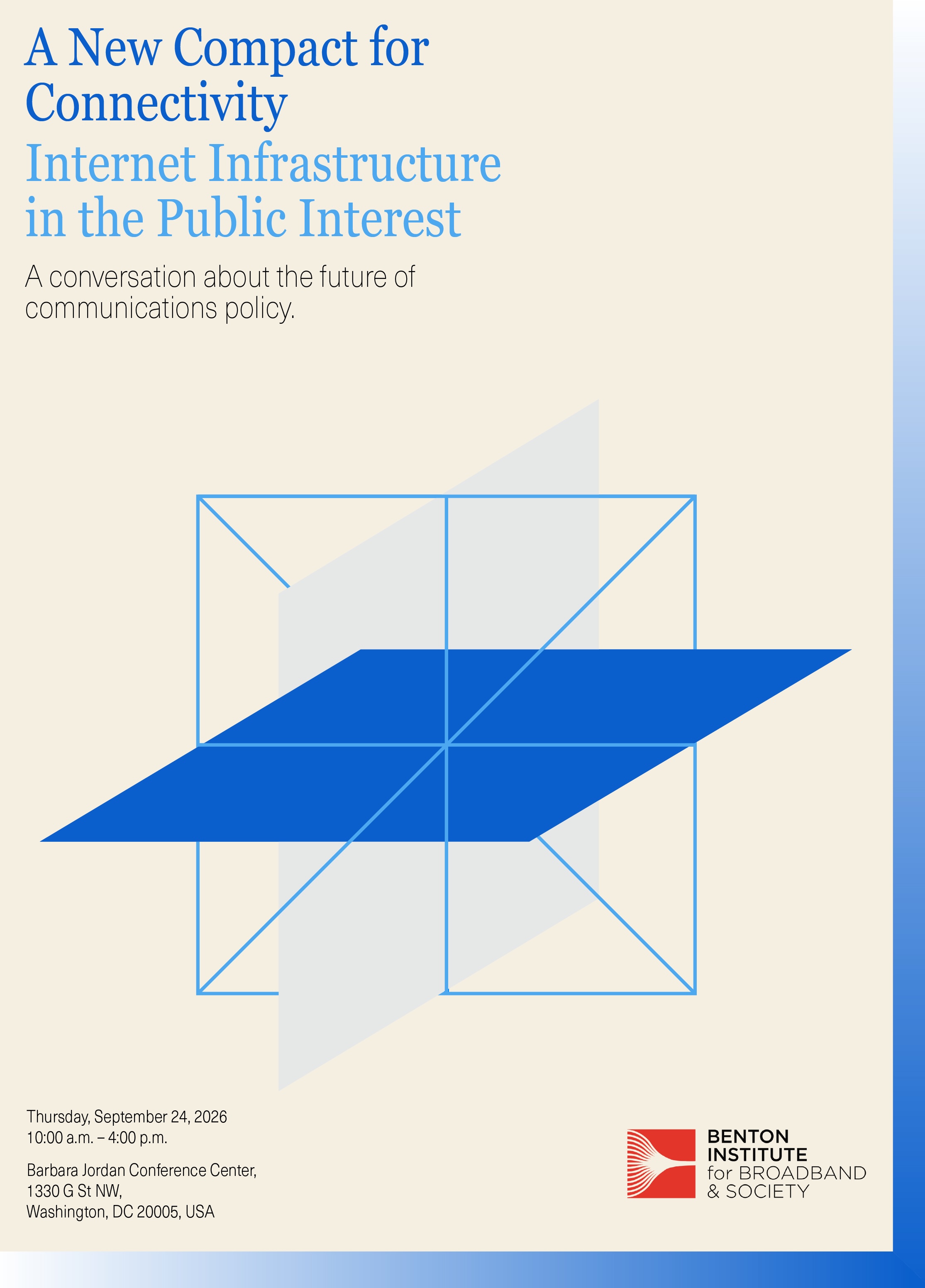
This spring, the Benton Institute for Broadband & Society marked the 30th anniversary of the Telecommunications Act of 1996 by looking back at the policies that shaped the modern communications landscape. On September 24th, we look to the future.
A New Compact for Connectivity: Internet Infrastructure in the Public Interest is a one-day convening exploring the future of connectivity policy. The day will begin by asking how enduring technical principles and public-interest values apply to today's internet infrastructure. We will examine the internet’s evolving technical architecture, the changing broadband marketplace, and shifts in the institutions and policies that shape access, affordability, and accountability. The internet has become essential infrastructure, but the laws, institutions, and policies that govern it were built for a different era. We need a new compact for connectivity.
We’ve organized the day around four big questions.
1. What principles should govern essential internet infrastructure?
Translating Core Principles of the Communications Act for the Modern Internet
In the thirty years since the Telecommunications Act, our communications landscape has transformed. But the principles that undergirded the law—including interconnection, nondiscrimination, and universal service—were answers to problems that persist. This panel will ask which of those principles still hold, which need rethinking, and what it would take to carry them into a statute written for the present and the future.
Speakers: Scott Jordan (Moderator), Tejas N. Narechania, kc claffy, Lai Yi Ohlsen, Johannes M. Bauer
2. What kind of market are those principles operating in?
The Evolving Broadband Marketplace
The broadband marketplace is being reshaped by convergence, consolidation, new infrastructure demands, and the final stages of major public investment. This panel will examine how these forces are changing competition and deployment, what gaps will remain after BEAD, how data centers are affecting broadband networks and investment, and what role the private sector can play in addressing affordability and expanding meaningful connectivity, especially in remote and rural areas.
Speakers: Angie Kronenberg (Moderator), Ernesto Falcon, Claude Aiken, Russ Hanser
3. What tools do we have to achieve universal access and affordability?
Shaping Supply, Supporting Demand: Policy Levers for Universal Service
Broadband policy has long taken a two-pronged approach to universal service—incentivizing network deployment and providing subsidies to support adoption. This panel will take stock of how these strategies have fared, where new tools are needed, and which institutions are well-positioned to act.
Speakers: Christopher Ali (Moderator), Brian Vo, Benjamin Dinovelli, Joshua Breitbart, Nell Geiser
4. Who has the power and capacity to enforce the public interest?
Exercising Oversight, Ensuring Accountability
Recent Supreme Court decisions and political pressures are reshaping the role of independent agencies and raising new concerns about who has the authority, expertise, independence and credibility needed to conduct meaningful public oversight over essential infrastructure. This panel will examine the future of federal oversight and the growing role states may play in ensuring accountability and protecting the public interest.
Speakers: Joseph Wender (Moderator), Harold Feld, Anna Lenhart, Lisa Hone, Jud Cary
Plus, lightning talks about the Public Cloud, Municipal Data Centers and applying the lessons of electrification to internet infrastructure.
Join us to build toward a new compact that defines the public-interest obligations of essential infrastructure, puts the public at its center, and is built for the needs and challenges of the next generation.
Register to join us online. The event will be live-streamed on the Benton Institute for Broadband & Society's YouTube channel.