

Jorge A. Rodriguez
Marjorie & Charles Benton Opportunity Fund Fellow
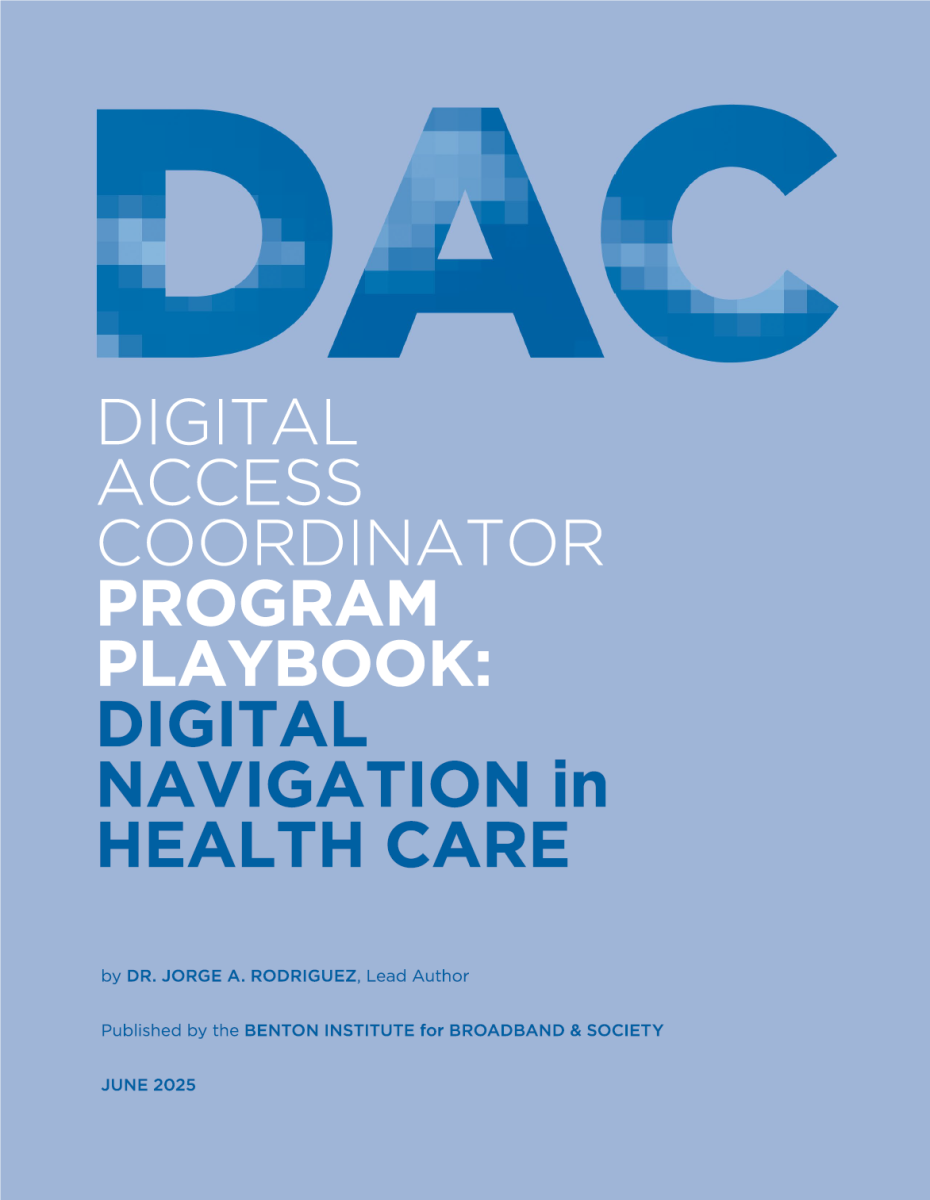
Digital health applications, from tele-mental health services to remote patient monitoring to health portals, have the promise of improving people’s access to health care. But in order to ensure that patients can benefit from these advances in technology, they need robust, affordable internet connections, devices, and the skills to use these technologies safely.
The Digital Access Coordinator (DAC) Program Playbook is a tool for clinicians, practice staff, and hospital leaders who are interested in addressing digital literacy gaps in their patient populations through the implementation of a digital navigator program.
Read more here.
Dr. Jorge A. Rodriguez is a clinician-investigator at Brigham and Women’s Hospital and Assistant Professor at Harvard Medical School in Boston, MA. His work focuses on the thoughtful application of health technology to achieve health equity. He has also made contributions to work bridging disparities in patient-facing health technology, especially patient portals, mobile apps, artificial intelligence, and telehealth.
WEBINAR: How Broadband Could Improve Health Outcomes
Digital health applications—from tele-mental health services to remote patient monitoring to health portals—offer the promise of improving people’s access to healthcare. But in order to ensure that patients can benefit from advances in technology, they need robust, affordable internet connections, devices, and the skills to use these technologies safely.
Read more here.
How Digital Navigation Can Transform Healthcare
Ever since the onset of the COVID-19 pandemic, it has become ever more clear that all U.S. residents need accessible healthcare. For those who may not have broadband access at home or who struggle to navigate the increasingly complex digital tools used by our healthcare system, that accessibility becomes even more challenging.
Read more here.
A system-wide approach to digital equity: the Digital Access Coordinator program in primary care
The transition to digital tools prompted by the pandemic made evident digital disparities. To address digital literacy gaps, we implemented a system-wide digital navigation program. The Digital Access Coordinator (DAC) program consists of 12 multilingual navigators who support patients in enrolling and using the patient portal and digital tools. We implemented the program in our primary care network which consists of 1.25 million patients across 1211 clinicians.
Read more here.