


From Exodus to Access:
Unraveling the Great Migration's Connection to the Digital Divide
As part of the Marjorie & Charles Benton Opportunity Fund Fellowship’s Equitable Broadband in Urban America Research Group, Fellows are sharing the journeys that brought them to digital equity work. In this post, Tate focuses on her journey that led her to be the inaugural Director of Digital Equity for Cook County and on her deeply personal research topic, "From Exodus to Access: Unraveling the Great Migration's Connection to the Digital Divide."
March 2024
This project, born from my own experiences, will explore the intriguing parallel between the historic Great Migration and the present-day lack of computer adoption in those migration recipient cities, starting with Chicago. I seek to uncover the interplay between these two phenomena, shedding light on the barriers that impede digital inclusion and the lessons governments, libraries, community-based organizations, and others who champion digital equity nationwide can learn from history. However, before I talk about the research project and how I found my way to Cook County, allow me to start with my digital inclusion roots, a practice in my household even though it did not have such a formal name.
In 1980, my father, Henry Williams, purchased our family's first computer after his co-worker introduced him to the future of the workforce using technology. This early exposure to technology, a pivotal moment in my life, was made possible by my father, a tool-and-die inspector at International Harvester. His co-worker, of Asian descent, informed my father that he should buy a computer for us, his children, because, by the time we became adults, all jobs would use a computer. As a note, in 1980, International Harvester became the first manufacturer to add a computer to a farm tractor (Wendell, 2011). My father certainly had early technology skills based on his service in the United States Air Force and some digital skills using scientific calculators in his work role. Still, he had no idea how a computer worked.
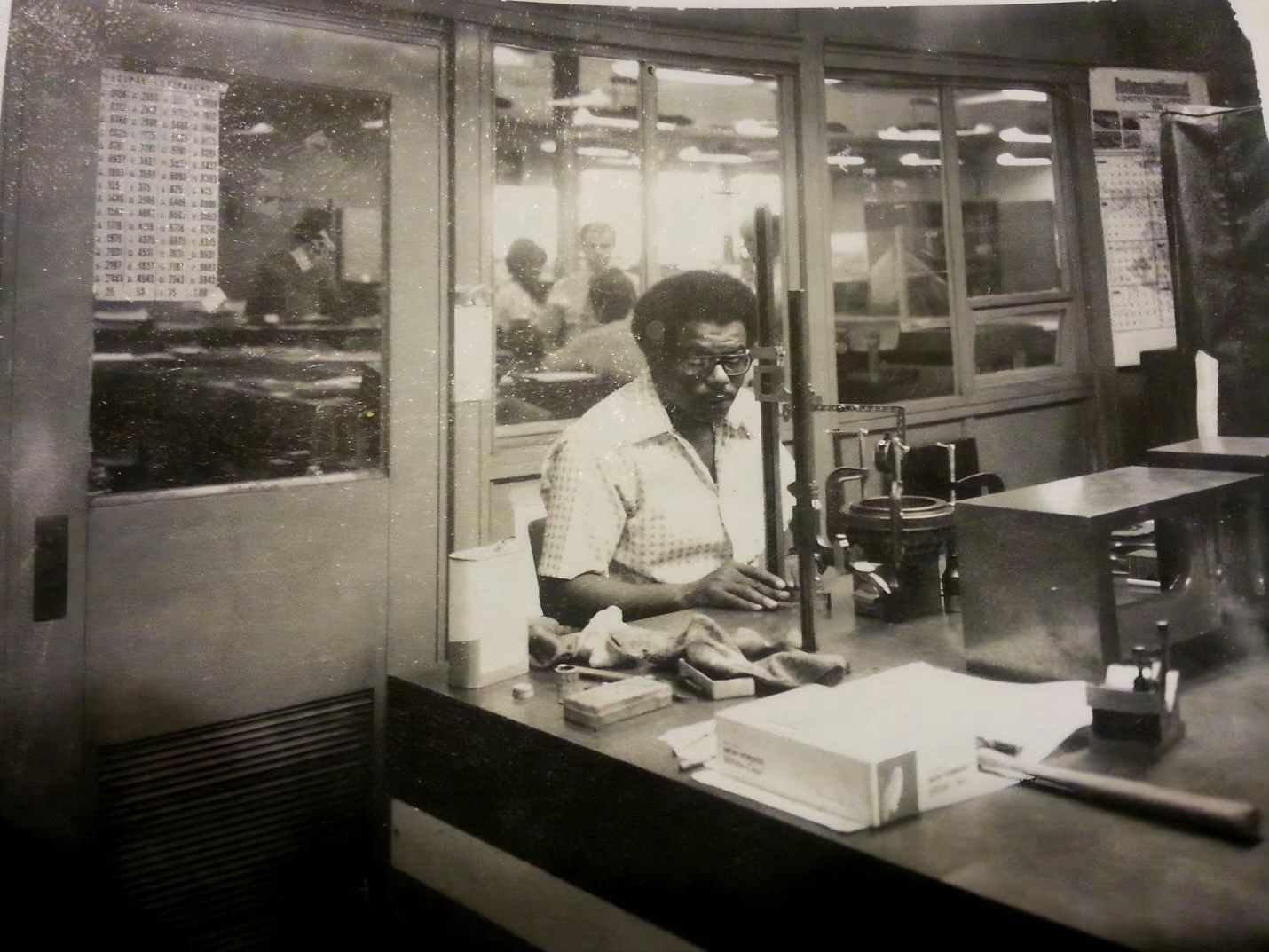
Henry Williams at International Harvester
When my father brought home this large and clunky piece of technology in a box with an Apple logo, my brothers and I initially thought it was a giant box of Affy Tapples, which was thrilling to think about as children. However, it was an Apple II computer with an instructional manual as thick as the Yellow Pages. My father told me and my brothers to read and learn how to use it. We were all overwhelmed by the computer's presence. The Apple II box sat in the corner for a long time, not for the ever-present lack of curiosity, but no one in our home had the confidence or skills to understand what we were supposed to do with it. My father had already preached about how expensive it was, so we, the children, did not want to break it.
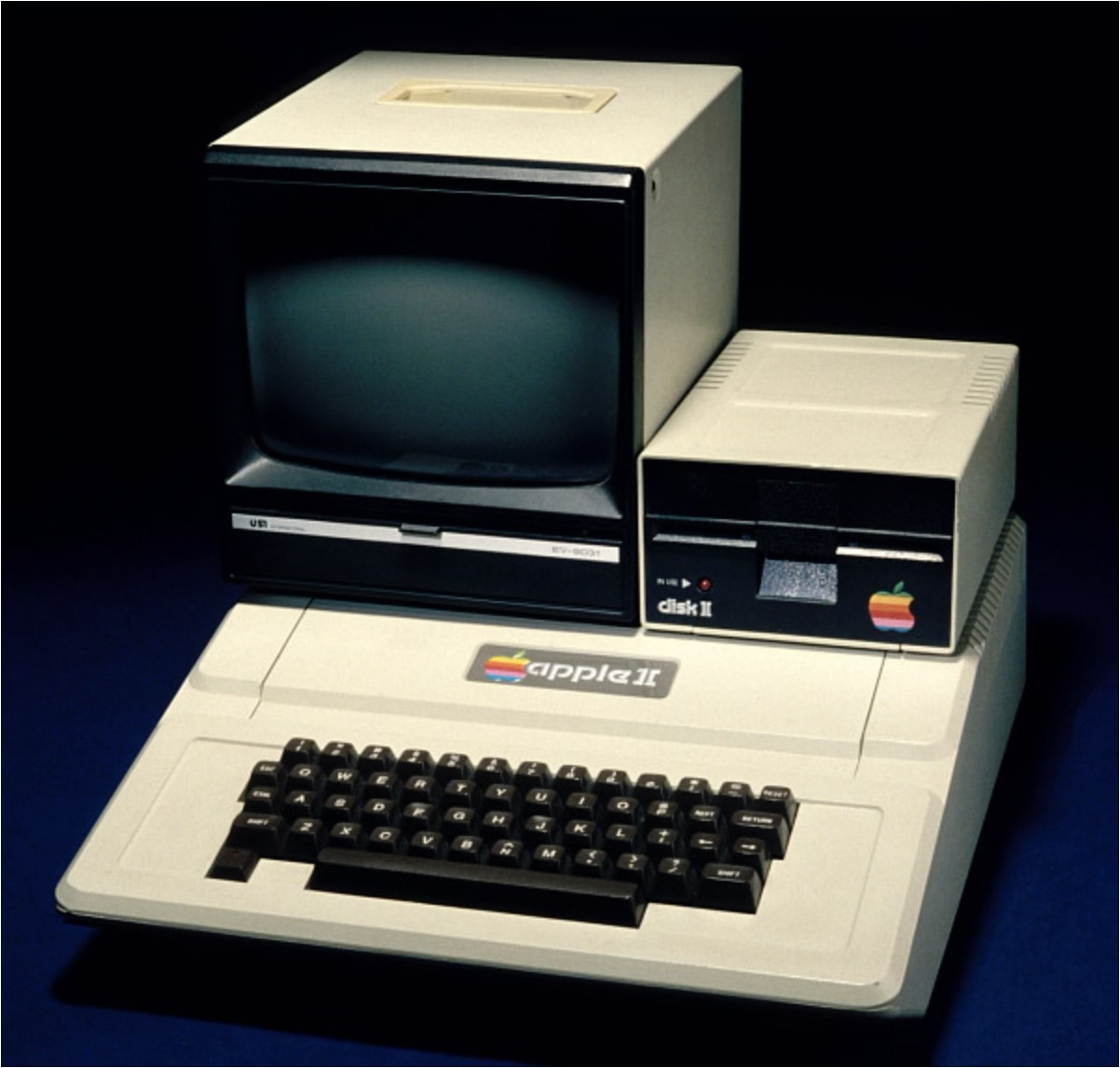
Apple II Computer (https://americanhistory.si.edu/collections/nmah_334638)
A few months passed, and my father's friend from work came by the house to drop off some homemade egg rolls his wife had made for my mother. [As a note, my mother loves egg rolls, and I just finished sending her an UberEATS order with egg rolls in it.] Once my father's friend saw that we had the computer and that it was not in use, he spent the next three hours working with my younger brother and me to get the computer set up and show us some cool things to do with it, which, at that time, was playing games, like Little Brickout and Lemonade Stand, that came with the device. One could say that my father's friend was our first digital navigator. Having a computer in the home helped me develop technical skills, nurture critical thinking, and sparked a love for processes and procedures, all of which have significantly helped me in educational pursuits and job opportunities.
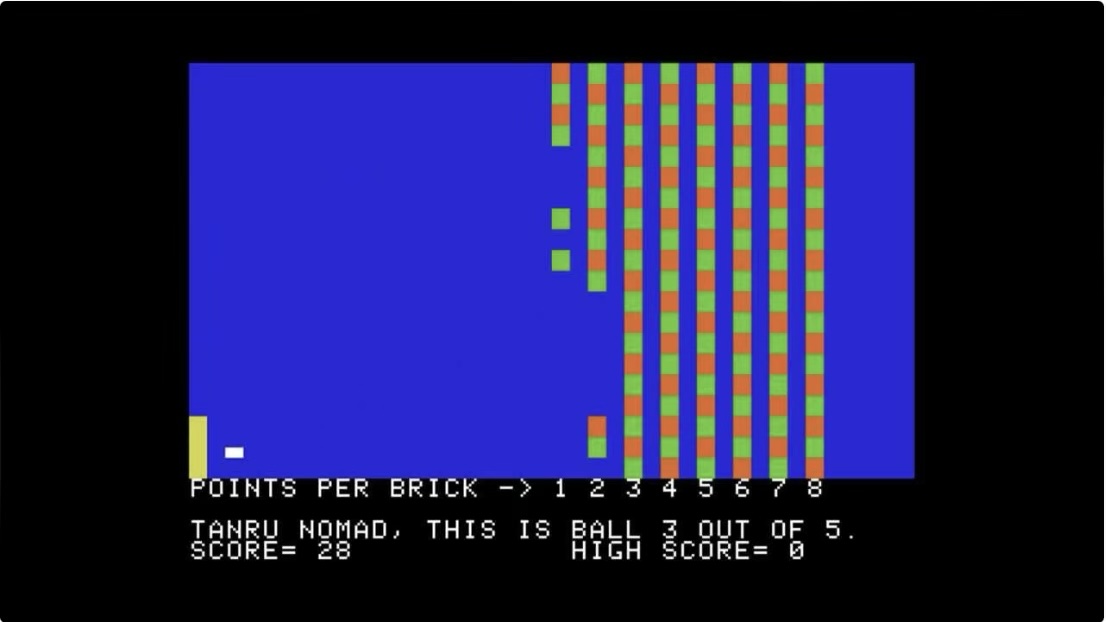
Little Brickout Game-Apple II Computer (Forster, 2005)
Let's fast forward to the most pivotal role in my career, which I have occupied in the digital inclusion advocacy space. In 2011, I was hired as the Program Associate for a newly formed organization, Smart Chicago Collaborative (Smart Chicago), a civic organization devoted to improving lives in Chicago through technology. Like the Cook County role, I was not looking for a new job but understood the importance of trust and representation in technology adoption. And if I could be honest and vulnerable here, all the decision-makers were white. However, Smart Chicago was founded partly by the City of Chicago, the John D. and Catherine T. MacArthur Foundation, and The Chicago Community Trust. I strongly feel that any initiative that seeks to advance digital opportunity in marginalized communities without including community members from those communities and having leadership representatives of those communities will never reach its maximum impact.
When the Smart Chicago Collaborative opportunity came up, a colleague recommended it to me because, in my spare time, I created a large-print technical manual to teach my father how to use his cell phone. He shared that manual with all his friends at the senior center in Kankakee, and, coincidentally, my colleague's grandmother received a copy of the manual and raved about how helpful it was. She pointed me toward the job posting, and, after a lengthy hiring process, my journey at Smart Chicago began.
Smart Chicago received many accolades and was lauded for contributing to civic technology (GovTech, 2021). Some of the fantastic projects Smart Chicago created include:
- Broadband Technology Opportunities Program (BTOP)-Sustainable Broadband Adoption (SBA) and Public Computing Centers (PCC)
- Connect Chicago
- Chicago Health Atlas
- Documenters
Tolbert, Anderson, and Mossberger (2014) indicate from the evaluation of Smart Chicago’s SBA Program, “Smart Communities,” that from 2008-2013, the target communities experienced a greater rate of growth in Internet use, home broadband adoption, and several activities online (including online job search), compared to similarly situated Chicago community areas, controlling for other demographic changes across neighborhoods. The differences were substantively large (9-12 percentage points) and statistically significant. Although my name and the many other champions who worked with me during the Smart Chicago days, unfortunately, are often not cited, we worked incredibly hard to implement a model centered on the voice and heart of communities and their trusted partnerships.
In 2016, I became the Interim Executive Director of Smart Chicago and vacillated about transitioning into the role. Maybe it was imposter syndrome. Maybe I understood Smart Chicago’s long-term sustainability concerns (GovTech, 2021). However, the most significant impact on my future with Smart Chicago came with my father's passing in 2017. Grief and sadness were significant during that time, but, as the leader, I could not show it most days. I informed the steering committee that I did not want to accept the Executive Director role, and we collectively decided to sunset the organization. I wonder from time to time about where the City of Chicago and our region would be from a digital equity perspective if I had taken up the leadership helm at Smart Chicago seven years ago.
One afternoon in December 2021, I received several communications from colleagues, many from my Smart Chicago days, informing me of the Director of Digital Equity role at Cook County. At the time, I was consulting on some incredible projects and certainly not looking for a full-time role, especially not one that was not 100 percent remote. However, after reading the job description, I realized it was written specifically for me and my skill set. After speaking with my family about it, because working outside the home was going to impact my family dynamics and routines, I applied for the role in January 2022. On June 13, 2022, I started as the inaugural Director of Digital Equity for Cook County in the Office of President Preckwinkle.
I spent the first six months in my role discovering and understanding how Cook County works. It is a lot to unpack as the second-largest county in the nation mostly within the third-largest city, Chicago,. Although Cook County and Chicago share a lot, they have two distinct governance structures. The City of Chicago also has its own Digital Equity Director in the Mayor’s Office. In January 2023 during Digital Inclusion Week, I set a strategic plan in place, which included assembling a group of hyper-local champions to help contribute to the first-ever digital equity action plan for Cook County. We conducted a community-wide digital equity survey with over 6000 responses (2613 from Chicago and 3664 from Suburban Cook County). We held 12 community conversations to hear residents' thoughts and feelings directly about their levels of connectivity, digital skill learning opportunities, and access to devices. The data collected informed the county’s Digital Equity Action Plan released on October 3, 2023.
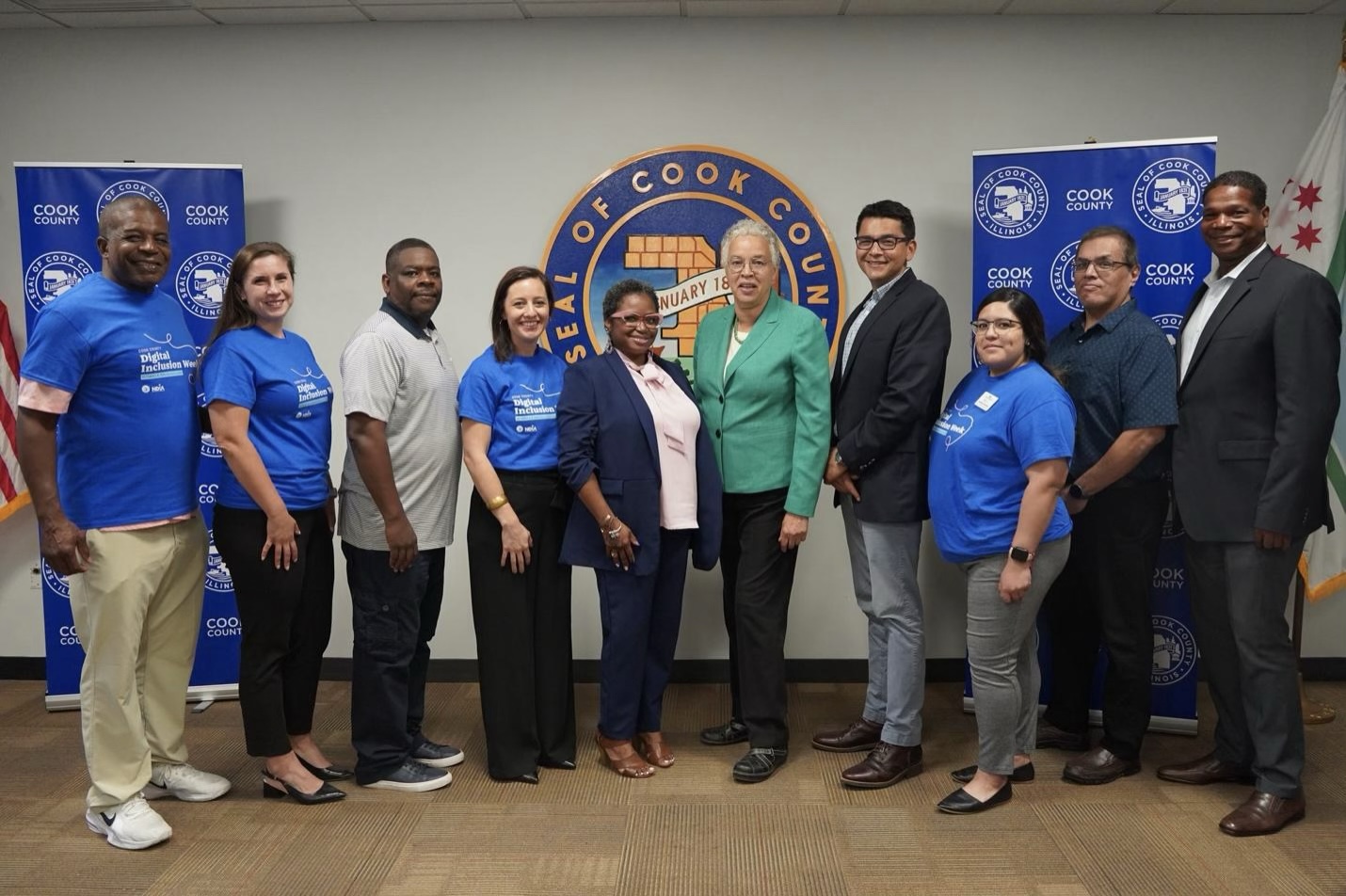
Digital Equity Action Plan Release, Cook County Press Conference on October 3, 2023
I am incredibly purposed as Digital Equity Director. I emphasize centering residents’ voices and storytelling as critical components in our digital equity outreach and engagement strategy. Storytelling is vital as many of our residents across Cook County are non-native English speakers: 35.2 percent of households do not speak English at home. When storytelling is used to build connections, it maximizes resident voice in language-access households (Barua, 2023). In communities that have suffered disinvestment and are disenfranchised, resident voice is increasingly essential to inspire action (Chioneso et al., 2020). When we look at low technology adoption, lack of devices, and no internet in the home in African American communities in Cook County, lack of trust is as much of a key contributor as the lack of financial resources (Preckwinkle & Tate, 2023).
The Great Migration
The Great Migration was a significant chapter in American history when millions of African Americans fled the oppression of the Jim Crow South and sought a better life in the North. By examining the social, economic, and political factors driving this exodus through my research topic, “From Exodus to Access: Unraveling the Great Migration's Connection to the Digital Divide,” I am laying the foundation for understanding the shared struggle for progress and equality.
The legacy of racial discrimination and systemic inequalities stemming from the Great Migration has resulted in a disproportionate distribution of digital resources and opportunities, especially in Chicago and other communities comprising generations of the Great Migration. Drawing inspiration from the resilience and determination shown during the Great Migration, my research project seeks to uncover valuable lessons applicable to addressing the lack of computer adoption. By highlighting the resourcefulness and community support that enabled migrants to navigate unfamiliar territories, we draw parallels to the need for collective action in bridging the digital divide. My research will present valuable insights and solutions to tackle the digital divide by analyzing the shared struggles and drawing inspiration from past victories.

For my research project, I will use a mixed-methodology approach centered on storytelling. This inclusive approach design will comprehensively discover the interplay between history, technology, and marginalized communities. One of the deliverables for my fellowship is creating the podcast Digital Determinants, a mixed-media presentation of people, data, and stories. There are 18 podcast episodes planned for this research project, and five have already been released. The Digital Determinants Podcast is available on Spotify, iHeart Media, YouTube, and https://digitaldeterminants.com.
References
A look at the Smart Chicago Collaborative model. (2021, April 22). GovTech. https://www.govtech.com/dc/articles/a-look-at-the-smartchicago-collabora...
Apple II Microcomputer. (n.d.). https://americanhistory.si.edu/collections/nmah_334638
Barua, S. (2023). Digital Storytelling: Impact on learner engagement and language learning outcomes. www.academia.edu. https://www.academia.edu/104085311/Digital_Storytelling_Impact_on_Learner_Engagement_and_Language_Learning_Outcomes
Chioneso, N. A., Hunter, C. D., Gobin, R. L., Smith, S. M., Mendenhall, R., & Neville, H. A. (2020). Community Healing and Resistance through Storytelling: A framework to address racial trauma in Africana communities. Journal of Black Psychology, 46(2–3), 95–121. https://doi.org/10.1177/0095798420929468
City Bureau. (2020, February 10). How did City Bureau’s Documenters program get started? — City Bureau. City Bureau. https://www.citybureau.org/notebook/2019/7/16/how-did-city-bureaus-docum...
City of Chicago | BTOP / SBI Archived Grant Program. (n.d.). https://www2.ntia.gov/grantee/city-of-chicago
City of Chicago | BTOP / SBI Archived Grant Program. (n.d.-b). https://www2.ntia.gov/grantees/CityofChicago2
Cook County, Preckwinkle, T., & Tate, K. W. (2023). Cook County Digital Equity Action Plan. https://www.cookcountyil.gov/sites/g/files/ywwepo161/files/documents/202...
Hoover, G. (2020a, December 2). Whatever became of international harvester? Business History - the American Business History Center. https://americanbusinesshistory.org/whatever-became-of-international-har...
Forster, W. (2005). The Encyclopedia of Game Machines: Consoles, Handhelds and Home Computers 1972-2005. Winnie Forster Gameplan.
Old Classic Retro Gaming. (2022, September 9). Apple II Game: Lemonade Stand (1979 Apple Computer) [Video]. YouTube. https://www.youtube.com/watch?v=ryArL9lU3EI
Smart Cities LibraryTM. (2018, January 16). Smart City – Chicago. https://www.smartcitieslibrary.com/smart-city-chicago-2/
Tolbert, C., Anderson, C., & Mossberger, K. (2014, October 27). Digital Literacy is a Game Changer: A Neighborhood-Level Analysis of Chicago’s Smart Communities. Brookings. https://www.brookings.edu/articles/digital-literacy-is-a-game-changer-a-...
Welcome. (n.d.). https://smartchicagocollaborative.org/
Wendel, C. (2011). 150 years of international harvester. Krause Publications.