

Rural Nebraska Offers Insights into BEAD and Technological Neutrality

Tuesday, July 22, 2025
Digital Beat
Rural Nebraska Offers Insights into BEAD and Technological Neutrality

On June 6, 2025, a policy notice from the National Telecommunications and Information Administration (NTIA) forced state broadband offices back to the drawing board.
With plans for the $42.45 billion Broadband Equity, Access, and Deployment (BEAD) Program nearly final, the preference for fiber broadband—established in the program’s original Notice of Funding Opportunity—was eliminated. Under the new rules, any technology that can claim speeds of 100 Mbps down and 20 Mbps up is treated as equal, with project selection defaulting to the lowest‑cost bidder. The new rules additionally allow unlicensed fixed wireless (ULFW) providers to compete for BEAD funding under the same conditions as providers of other technologies. ULFW providers may also claim that they already serve BEAD‑eligible locations if service meets the 100/20 Mbps standard and other related requirements, potentially removing locations and areas from the list of locations for the subaward competition.
NTIA calls this change “technology neutral.” However, as some advocates have warned, a “technology blind” approach that shifts focus from selection for long‑term value to the lowest upfront cost creates significant risks.
Households once slated for a fiber upgrade could instead be assigned more expensive satellite internet service with the same high latency and weather disruptions they sought to escape, to say nothing of those households that are now ineligible for an upgrade. The NTIA’s rationale is to maximize locations served for the lowest cost.
But is the cheapest technology truly the right fit for rural communities?
Following the June 6 policy notice, states notified ULFW providers of a seven‑day period to submit documentation for any areas they wished to claim to be already serving. The potential impact of removing claimed locations from BEAD varies by state and by ULFW providers’ actual submissions of documentation.
My colleagues and I examined performance and satisfaction with different technologies in Nebraska. Nebraska offers an interesting case among the states, as it sought claims from ULFW providers as of March 31, 2025 (before the June 6 policy notice) following NTIA’s Alternative Broadband Technology Policy Notice. ULFW providers submitted download and upload speeds and latency for claimed locations. Between March 31 and the present, Nebraska reduced its number of unserved and underserved Broadband Serviceable Locations (BSLs) from 29,597 to 14,288. Some of those locations were removed after review of the Federal Communications Commission Fabric V6; however, a large portion of those BSLs were removed because of ULFW coverage claims of network performance.
Since nearly half of the previously designated BSLs are no longer part of Nebraska’s BEAD competition and those remaining may not be served by fiber networks, we turn to a 2024 study comparing different technologies to understand how technological neutrality may play out for households under the revised BEAD Program.
A Hard Look from Rural Nebraska
Our research team at the University of Nebraska at Kearney measured the real‑world performance and subscriber satisfaction associated with different technologies for internet access across the state. We equipped 296 rural households with Raspberry Pi network monitors that ran a speed test every five minutes for a week, and we surveyed these households on satisfaction levels with their connection. The results reveal a divide between advertised speeds and actual quality of service, demonstrating that performance is defined not by the speeds that providers advertise, but by what households experience.
Two findings from our study leap out.
- Latency matters. The round‑trip signal time governs the feel of an internet connection. Median latency on fiber in our panel is 24 ms, whereas on geostationary satellites it is 686 ms, more than 28 times slower. Latency is a hidden arbiter of quality, the reason video calls stutter and cloud applications lag.
- Satisfaction varies by technology. As the data show, satisfaction is far lower for households with satellite or older DSL connections than it is for wired connections, even when all technologies advertise comparable speeds. Cable and fiber deliver the highest satisfaction scores, while terrestrial wireless and DSL lag behind.
Performance and satisfaction table
|
Access technology |
Households (N, %) |
Subscriber satisfaction (1–5 scale) |
Median latency (ms) |
Median monthly bill |
|---|---|---|---|---|
|
Fiber‑optic |
52 (17.6 %) |
3.72 |
24 |
≈ $75 |
|
Cable |
55 (18.6 %) |
3.62 |
40 |
≈ $80 |
|
Terrestrial fixed wireless |
53 (17.9 %) |
3.07 |
177 |
≈ $75 |
|
DSL |
88 (29.7 %) |
2.72 |
137 |
≈ $70 |
|
Geostationary satellite |
31 (10.5 %) |
2.67 |
686 |
≈ $90 |
|
Smartphone hotspot |
17 (5.7 %) |
2.50 |
250 |
≈ $70 |
Crucially, price is not the culprit for differences in satisfaction by technology. Median monthly bills for every technology cluster fall between $70 and $90. This means subscribers with satellite service are paying a similar price for a connection that our data show is not only less responsive but also fails to meet their needs at a significantly higher rate.
Why Location Matters, But Technology Defines the Experience
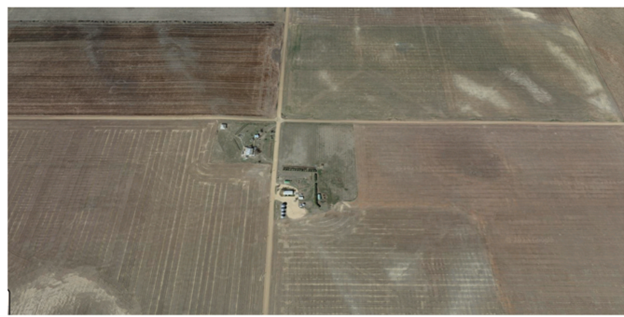
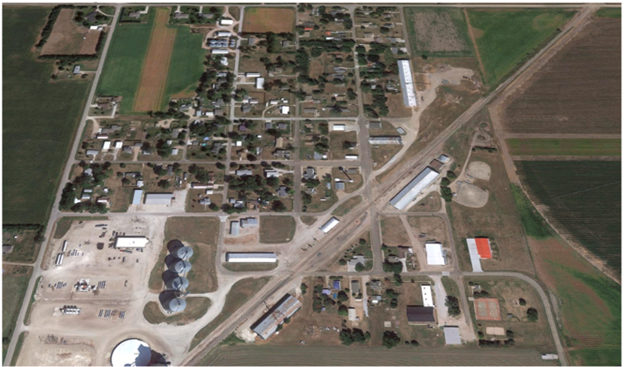
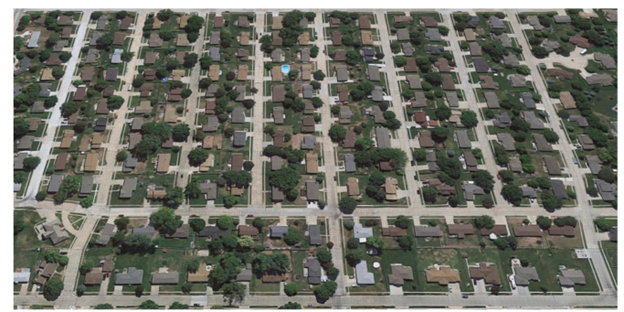
The BEAD program rightly focuses on unserved locations, which are disproportionately located in rural areas. However, “rural” is not a monolith. Using population and building data from our study’s communities, we identified three distinct rural “place types” (using a k‑means clustering algorithm on location‑level household data):
1.) Isolated farmsteads – Single homes, where satellite is often the only practical option today.
2. Small towns – Smaller towns generally comprising only a few residential blocks.
3.) Small city neighborhoods – Grid streets at suburban densities.
Under BEAD’s original rules, small towns were prime candidates for fiber builds, which our data show deliver superior service in terms of network performance and satisfaction. The new policy notice removes this preference. A satellite provider offering the lowest bid could win a project covering an entire census tract. This creates a frustrating scenario where residents of a small town, who are geographically well‑suited for fiber, could be relegated to a different technology that offers lower‑quality service—creating a tangible “over‑the‑fence” digital divide where superior connectivity is nearby but inaccessible, often due to factors like the high cost of a long service drop to a specific home, network capacity limits, or a provider’s construction backlog. And those households served by ULFW providers that have been removed from the list of areas eligible for BEAD funding will simply be left out.
A Path Forward: Data‑Driven Guardrails for States to Mitigate Risk
While the BEAD Program has changed, states can leverage their authority to protect consumers and ensure long‑term value. To mitigate risk, state broadband offices can adopt data‑driven guardrails that account for the complexities of the rural environment and rely on verifiable metrics.
- Prioritize real‑world performance metrics. For a funding approach to be truly neutral, it should also be pro‑consumer. States should, to the greatest extent possible, verify bidders’ network performance claims. In addition to network performance tests like those used in our study, states can draw on datasets such as Ookla’s Speedtest Intelligence, M‑Lab’s measurement platform, or other consumer speed‑test datasets to cross‑check provider claims. Colorado’s Scalable Technology Questionnaire offers an example of what providers can forecast and explain about network performance based on designs.
- Foster public accountability with a live dashboard. To deter “build‑and‑forget” behavior, states can require BEAD‑funded providers to report performance data to a public‑facing dashboard. Maine’s Broadband Intelligence Platform offers a ready model, giving regulators and residents a potential early‑warning system when network performance lags. In Virginia, broadband grant recipients must already file public reports tracking milestones met and dollars spent and have public facing dashboards on broadband expansion. Making such real‑time accountability a condition for BEAD funding would ensure performance and give consumers transparent information.
- Track technology and network performance by place‑type. States can use their Broadband Serviceable Location data to classify addresses by place‑type, allowing for later analysis of technology type and network performance in different place‑types. Such a classification may prove useful for any additional future investment in broadband infrastructure. Since BEAD funding may not cover all unserved and underserved locations in a state and because some technologies’ network performance may prove insufficient in the future, identifying the place‑types associated with BSLs may improve the targeting of funding and selection of scalable technology in the future.
The Stakes: A Reliable Connection or Another Decade of Buffering?
Dependable broadband is the foundation for economic opportunity, educational equity, and civic participation. Congress intended to purchase dependable broadband with billions in funding. Our work shows that the difference between a connection that is “good enough” and one that satisfies households is heavily influenced by the physical medium delivering the service. Failing to make this distinction risks investing in networks that communities may outgrow quickly, potentially creating the need for a second, more expensive round of public investment.
By implementing data‑driven guardrails, states can ensure their BEAD programs honors the real‑world factors of performance and satisfaction. To do otherwise means that a policy of ostensible neutrality risks cementing lower levels of satisfaction for rural Americans for years to come.
Dr. Jesse Andrews is a postdoctoral researcher at the University of Nebraska-Lincoln. As a Benton Opportunity Fund Fellow, he will examine the relationship between inland flood risk and broadband access among households in vulnerable flood-prone communities in Nebraska.
The Benton Institute for Broadband & Society is a non-profit organization dedicated to ensuring that all people in the U.S. have access to competitive, High-Performance Broadband regardless of where they live or who they are. We believe communication policy - rooted in the values of access, equity, and diversity - has the power to deliver new opportunities and strengthen communities.
© Benton Institute for Broadband & Society 2025. Redistribution of this email publication - both internally and externally - is encouraged if it includes this copyright statement.
For subscribe/unsubscribe info, please email headlinesATbentonDOTorg

Kevin Taglang
Executive Editor, Communications-related Headlines
Benton Institute
for Broadband & Society
1041 Ridge Rd, Unit 214
Wilmette, IL 60091
847-220-4531
headlines AT benton DOT org
Share this edition:


Broadband Delivers Opportunities and Strengthens Communities