

The Benton Institute for Broadband & Society's New Board Chair and What Comes Next

Weekly Digest
The Benton Institute for Broadband & Society’s New Board Chair and What Comes Next
You’re reading the Benton Institute for Broadband & Society’s Weekly Digest, a recap of the biggest (or most overlooked) broadband stories of the week. The digest is delivered via e-mail each Friday.
Round-Up for the Week of April 27-May 1, 2026
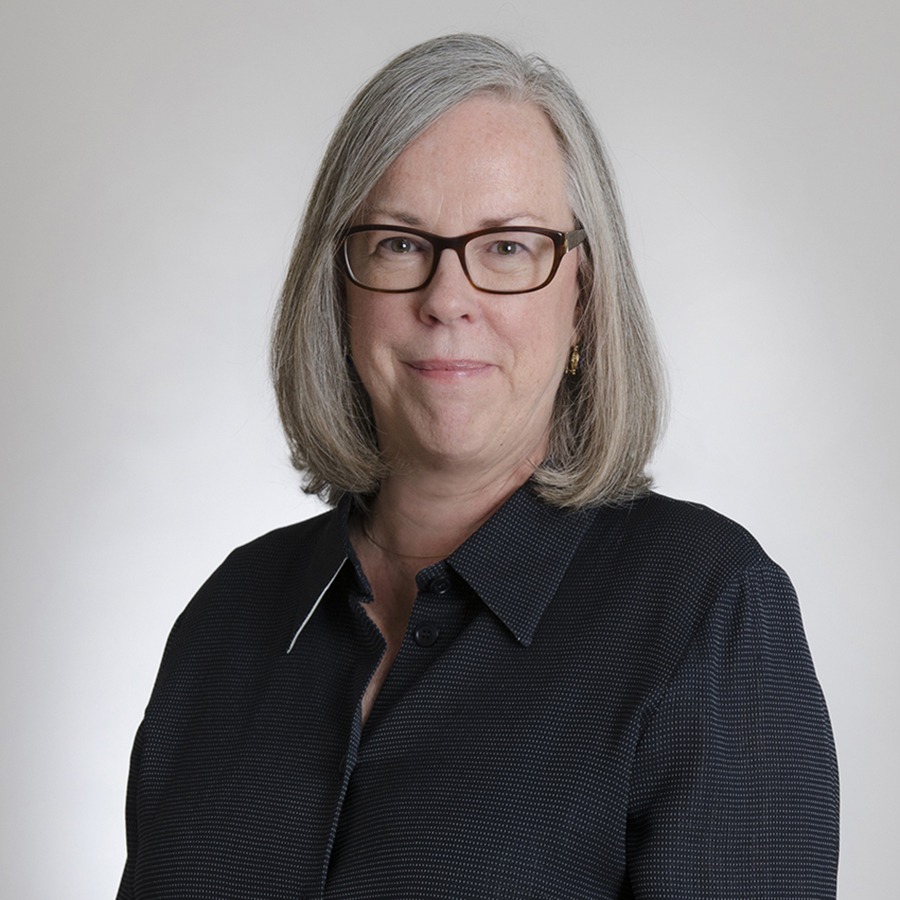
Adrianne Benton Furniss is the Benton Institute for Broadband & Society’s new Chair of its Board of Directors. Succeeding Austin L. Hirsch, Furniss steps into her new role after a ten-year tenure as Benton’s executive director ended in 2025.
For over a decade, Furniss has focused the organization on ensuring that the benefits of robust, affordable broadband service deliver new opportunities and strengthen communities around the nation. In the past year, Furniss has focused on Benton’s community engagement and other education and outreach work in the Institute’s home state of Illinois. She has also advised her successor, Dr. Revati Prasad, on development activities and external communications.
Furniss now steps into a new role to help guide the Institute as it continues its mission of advancing broadband for all and promoting the public interest. I sat down with Furniss to ask her how she’s seen the Benton Institute grow throughout her tenure, and what being Chair of the Board means to her moving forward.
What’s your perspective on Benton’s history and mission?
Over the course of our 45-year history, Benton’s mission to advance communications policy in the public interest—while protecting the democratic values of access, equity, and diversity—has not shifted. Marjorie and Charles Benton’s lifelong commitments and contributions to improving the lives of underserved people and communities have not wavered. But technology and society have changed immeasurably.
Charles—who died 11 years ago on April 29, 2015—had a roving intellect and curiosity. He was an idea guy and a risk-taker. In Benton’s early years, emerging communications technologies raised new public interest issues, and Charles wanted to do it all, working to define long-term policy solutions to help shape the early stages of the Internet Age. He’d throw tons of ideas at the wall and give staff the time and space (mostly) to figure out how to make some or all stick.
Charles was also a people person, a convener, a communicator. In the 1990’s, Benton organized a Public Interest Summit convening 700 non-profit leaders seeking to shape the emerging Information Superhighway. Benton went on to publish a series of reports on how the internet impacts education, healthcare, libraries, and, most importantly, the lives of the people who do not have access to this essential communications tool, drawing attention to the emerging digital divide. After the passage of the Telecommunications Act of 1996, Benton launched Headlines, a free daily email newsletter, to educate people about how the new Act was being implemented and other developments in telecommunications.
In the 2000’s, Benton called on policymakers to modernize federal telecommunications subsidy systems to focus on expanding the reach and affordability of high-speed internet access. In 2008, we released a comprehensive federal strategic plan to accelerate broadband deployment, which served as a major resource for the FCC’s National Broadband Plan.
How has Benton evolved in the past decade?
The 2010s were a decade of leadership transition for Benton. When I first became the executive director, Charles and I had to find balance in our leadership and management styles. Charles, while holding his values dear, was more of a “target of opportunity” guy. I was a “manage to plan” person. It was a delicate balancing act.
After Charles died, we undertook strategic planning and operational fixes to strengthen the institution. 2019-2020 were seminal years for us. Benton continued to take the long view, articulating, again, a national broadband policy agenda in Broadband for America’s Future (2019) and Broadband for America Now (2020). Congress adopted many of the broadband policies and funding recommendations we made in the Infrastructure Investment and Jobs Act. We changed our name to the Benton Institute for Broadband & Society to better reflect our mission and more focused work. Our goal became to make sure everyone in the U.S. can use and benefit from high-quality, affordable broadband, closing persistent gaps that limit individuals and communities. We asked leaders at all levels of government to embrace four building blocks of broadband policy—digital equity, deployment, competition, and the importance of community anchor institutions and community leadership. These four building blocks mapped much of our work moving forward.
We changed our status to an operating foundation, recognizing that staffing up to deliver information and research, and committing to advocacy, education, and engagement at the federal, state, and community levels would best promote broadband for all.
How have you and your leadership style evolved along with the Institute?
In trying to make sense of my career, I have always told people that the thread is the creation and distribution of content from companies whose “products” I was proud to represent. From Sesame Street to the distribution of television programs and films from the BBC, PBS, and The Criterion Collection, I ended my management career working in a family enterprise where the purpose of our newsletters and research is to widen the circle of people who understand that broadband enables individual opportunity and promotes strong communities.
Like Charles, I have always been a collaborator, believing that there is strength in numbers—the more people who believe in “broadband for all,” the more likely we can sustain the Institute’s mission despite technological and political changes.
I am humbled by the experts in our field—including those on our staff and board, and the fellows Benton has engaged during my tenure as executive director. I can only thank them for being patient with me and sharing their decades-long experiences to help Benton be a powerful champion for solutions to close the digital divide.
What are you looking forward to as Chair, and what are you hoping to accomplish?
Effective board chairs ensure the good governance and effectiveness of the Board of Directors and board committees, help set strategic direction, and mentor the Executive Director. I have enjoyed working with Revati and the staff as we further expand upon our values in an effort to articulate what makes the Benton Institute unique in this field. We have worked hard to maintain our independence and integrity and our focus on the future. We are proud that our efforts, done in collaboration and partnership with policymakers, researchers, practitioners, funders, and communities, are ensuring that broadband uses—for health care, education, democracy/civic participation, and financial inclusion—serve opportunity and equity for all.
I’m looking forward to continuing in the footsteps of the great Chairs that Benton has been blessed to have throughout our 45-year history and to continue the promotion of communications policy in the public interest.
Some Words, From the Board
Adrianne’s fellow board members offered additional insight into the Benton Institute’s transition and Adrianne’s leadership.
“I am delighted to turn the reins over to Adrianne after our partnership shaped the Institute into one of the most impactful broadband advocacy and research organizations in the country. Working with her to steward the family legacy has been one of my great honors,” said Austin Hirsch. Hirsch, who has served on the Benton board since 2013 and was selected as board chair in 2019 after Leonard J. Schrager stepped down, will remain a trustee and on Benton’s board as counsel.
“The Benton Institute is excited to welcome both Adrianne and Austin to their new roles,” said Benton Institute Trustee David Dodson. “We are delighted that Benton and those we serve will continue to benefit from their extraordinary leadership in the field of broadband.”
“Austin Hirsch’s dynamic leadership and focus on the public interest have been instrumental to Benton’s success. We are incredibly fortunate to continue benefiting from his wisdom as he passes the torch to Adrianne Furniss,” said Benton Institute Board Member Jim Kohlenberger. “Adrianne’s unsurpassed vision, proven leadership, and personal passion around extending broadband’s impact to those who can benefit most will help drive Benton’s continued growth, impact, and success. As broadband becomes increasingly important to the way we do just about everything, Adrianne’s leadership and Benton’s work have become increasingly essential to expanding broadband opportunities for all Americans—because as every new person is connected, we strengthen the very fabric of our nation.”
"Since joining the Benton Institute in 2022, I've shared a special partnership and mission with Adrianne," said Benton Institute Executive Director Revati Prasad. "I'm thrilled our partnership will continue to thrive as we strengthen this organization and seek new opportunities to advance life in the U.S."
Grace Tepper is an Editor and Researcher at the Benton Institute for Broadband & Society.
Quick Bits
- FCC Announces Tentative Agenda for May 2026 Open Meeting
- Former FCC officials want to force a vote on the ‘weapon’ Brendan Carr has invoked against broadcasters
- Moving Beyond Uncertainty: The Future of Universal Service Fund Reform Task Force
- ReConnect Funding Restored in FY2027 USDA Bill
Weekend Reads
- Fixed Wireless Access Market Deep Dive
- In Search of the World’s Fastest In-Flight Wi-Fi
- The Fourth Pillar of the AI Era: Fiber and the Physical Architecture of Intelligence
- Press freedom in decline in 100 out of 180 countries
ICYMI from Benton
- Is the High Cost Fund Ripe for Modernization?
- House Advances Broadband Legislation
- What Information is Treasury Collecting on SLFRF Broadband Projects?
- Is It Time To Reform USAC?
Upcoming Events
May 5—The future of connected cars (Brookings)
May 6—Defending the USF After SCOTUS (Schools, Health & Libraries Broadband Coalition)
May 6—Private 5G Networks at Risk (New America)
May 11—Why the Security Industry Is Fighting a Monopolistic Wireless Spectrum Proposal (Security Industry Association)
May 12-13—Virginia Broadband Telehealth Conference (Broadband Association of Virginia)
May 14—Cybersecurity Workshop for Broadcasters (Federal Communications Commission)
May 15—Cybersecurity Workshop for Telecommunications Carriers (Federal Communications Commission)
The Benton Institute for Broadband & Society is a non-profit organization dedicated to ensuring that all people in the U.S. have access to competitive, High-Performance Broadband regardless of where they live or who they are. We believe communication policy - rooted in the values of access, equity, and diversity - has the power to deliver new opportunities and strengthen communities.
© Benton Institute for Broadband & Society 2026. Redistribution of this email publication - both internally and externally - is encouraged if it includes this copyright statement.
For subscribe/unsubscribe info, please email headlinesATbentonDOTorg

Kevin Taglang
Executive Editor, Communications-related Headlines
Benton Institute
for Broadband & Society
1041 Ridge Rd, Unit 214
Wilmette, IL 60091
847-220-4531
headlines AT benton DOT org
Share this edition:


Broadband Delivers Opportunities and Strengthens Communities