Pawel Popiel
The network dialectic: the digital divide and the contradictions of Philadelphia's digital equity strategy
This study examines the political economy, discursive legitimations, and effectiveness of the primary U.S. policy response to narrowing the digital divide: public subsidies for internet service. Using Philadelphia as our case study, we analyze municipal efforts to enroll low-income communities in low-cost commercial broadband plans supported by the Affordable Connectivity Program (ACP). Like many other U.S.

Lived Broadband Policy: Experiencing the Affordable Connectivity Program
Public policy analysis overwhelmingly hews toward the quantitative. In the context of broadband policy research, quantitative data gleaned from surveys and other sources can illuminate how connectivity initiatives like the Affordable Connectivity Program (ACP) perform based on standardized metrics like enrollment counts, fund distribution, and the speed of broadband connections. However, these standardized metrics tell us little about how these initiatives affect the daily life of the very people enrolled in and often dependent on government subsidies for basic internet service.
America, Disconnected: What’s Biden’s Plan for Averting Digital Disaster?
As millions of Americans prepare to lose their internet connection, the Biden administration has been caught flat-footed, failing to articulate a robust plan to avert the looming connectivity crisis. The Biden Administration’s connectivity strategy continues the US government’s neoliberal aversion to creating and funding public options for the internet. As a result, the country’s primary mechanism for connecting the unconnected is directing users to corporate internet service providers’ (ISPs) low-income plans.

Against Digital Redlining: Lessons from Philadelphia’s Digital Connectivity Efforts during the Pandemic
Internet service providers’ discriminatory underinvestment in broadband infrastructure and services—referred to as “digital redlining” for disproportionately affecting low-income communities of color—is drawing increased public scrutiny, including from policymakers.

Bringing the FCC to the People and the People to the FCC
"Our media is precious. It’s how, outside of our strictly personal spheres, we speak to each other, inform each other, learn from each other, entertain each other, increasingly how we govern ourselves." With these words, Michael Copps opened a public hearing on media ownership rules. The hearing was not in Washington, DC, but Chicago, Illinois. Copps was not a local official, but a commissioner at the U.S. Federal Communications Commission (FCC).

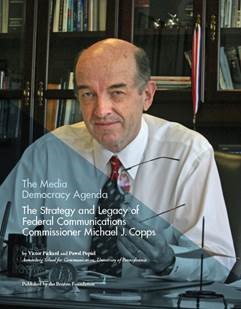
The Media Democracy Agenda: The Strategy and Legacy of FCC Commissioner Michael J. Copps
This report, part history, and part strategy playbook, examines the tactics and policy priorities of former-Commissioner Michael J. Copps during his 10 years at the FCC. An analysis of Commissioner Copps’s tenure, his political strategies, and his legacy is a timely endeavor, both for its historical importance and for its contemporary relevance. As a commissioner in the minority during the George W.
This report, part history and part strategy playbook, examines the tactics and policy priorities of former-Commissioner Michael J. Copps during his 10 years at the FCC. An analysis of Commissioner Copps’s tenure, his political strategies, and his legacy is a timely endeavor, both for its historical importance and for its contemporary relevance.