August 2020

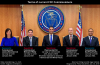
Withdrawal of Michael O'Rielly's nomination creates uncertain future at FCC

President Donald Trump's decision to withdraw his nomination of Michael O'Rielly, a Republican member of the Federal Communications Commission, for a new term has thrown into question the coming political balance-of-power and policy agenda at the agency. Republicans on the commission currently hold a 3-2 majority, but that could change depending on the outcome of the November presidential election and whether someone is appointed to O'Rielly's seat by the end of the year.


Names Surface for Possible O'Rielly Successor

Carolyn Roddy, a senior advisor at the National Telecommunications & Information Administration, and Hill staffer Crystal Tully, are two names that have surfaced as potential nominees to replace Federal Communications Commissioner Michael O'Rielly. Roddy was a member of Trump's FCC transition team following the 2016 election and was Metro Atlanta Regional Deputy Coordinator of the campaign. She was briefly an FCC lawyer in 2017.

Rural families without internet face tough choice on school

Roughly 3 million students across the United States don't have access to a home internet connection. A third of households with school-age children that do not have home internet cite the expense as the main reason, according to federal Education Department statistics. But in some rural places, a reliable connection can't be had at any price. The void is especially acute in eastern Kentucky. Many districts have been scrambling  to set up paper-based alternatives to online instruction or create WiFi hot spots in school parking lots and other public areas.

No more gut-based strategies: Using evidence to solve the digital divide

The key missing component of nearly every proposal to solve the connectivity problem is evidence — evidence suggesting the ideas are likely to work and ways to use evidence in the future to evaluate whether they did work. Otherwise, we are likely throwing money away. Understanding what works and what doesn’t requires data collection and research now and in the future. It doesn’t have to be this way. The pandemic did not only lay bare the implications of the digital divide, it also created a laboratory for studying how best to bridge the divide.

August 10-14, 2020
Weekly Digest

Illinois Addresses the Digital Divide

Benton Institute for Broadband & Society

Friday, August 14, 2020

Bridging the digital divide has never been more critical

Money spent getting high-speed internet into more people’s hands is money well spent. Every dollar invested in broadband returns nearly four dollars to the economy. In addition to expanding the reach of networks, we must focus on the cost issue. Broadband is surely an essential need for all Americans in the 21st century.

How Internet Service Providers Fuel Inequality

That’s why the next item on the Congressional agenda, and on a prospective Biden administration’s agenda, should be a thorough review of a system in which Internet service providers have no obligation to provide service to the areas most in need. Providing an essential service like high-speed Internet should be a requirement enshrined in law. The big telecom companies don’t see sufficient financial incentive to invest heavily in rural broadband, and no one can make them do it. Congress needs to step up and not rely on the Federal Communications Commission to solve this problem.

Houston startup pumps rural internet access through unused TV channels

A Houston startup called Skylark Wireless is developing a new kind of internet service that relies on the unused frequencies normally associated with television stations. Known as TV white space technology, or TVWS, it’s seen as a real possibility to get high-speed data service to people in rural areas. While other companies are using TVWS to do rural broadband internet access, Skylark’s approach is unique.