

DEA: Defend, Educate, Advocate

Wednesday, May 21, 2025
Digital Beat
DEA: Defend, Educate, Advocate
Remarks at Net Inclusion 2025
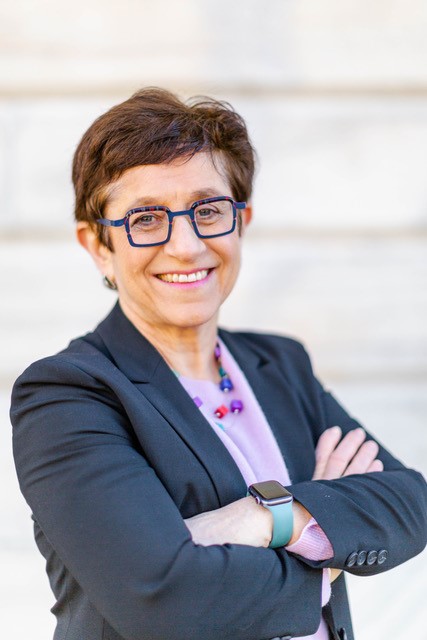
Thank you, Mikhail. It’s an honor to be here this afternoon. I’m in awe of the work you all do every day to help people get connected and stay connected to a network so central to our lives that most people take it for granted. I want to thank Angela Siefer and Amy Huffman for inviting me to speak at such a critical time for you and for everyone in the country.
On Monday, May 5th, Amy and I got on the phone to discuss what I’d be talking about today. This was, of course, before President Trump’s now-infamous tweet about the Digital Equity Act. But even back then, I knew morale was going to be low. Many of you were preparing to submit grant applications, and some of you had already won awards. But it had been months since we heard any updates or saw any progress from the National Telecommunications and Information Administration (NTIA), and the silence was unnerving.
On May 5th, as I outlined this speech, my goal was to buck you up. I wanted to remind you how much our community has grown and how much we’ve accomplished. In 2016, when I was Counselor to Federal Communications Commission Chairman Tom Wheeler, I spoke at the very first Net Inclusion in the beautiful Kansas City Public Library. There were about 200 attendees, and nobody knew what the future would hold for those digital equity and inclusion practitioners. I understand that there are over 800 attendees here today, with hundreds more unable to come because of grant restrictions. So in under a decade, every one of you in this room created an entirely new field of work—one that is central to ensuring that every person in this country can succeed.
On May 5th, there was still cautious optimism. Back then, it was possible to imagine that the Commerce Department might simply tinker with the Digital Equity Act Grant Program—maybe change the name—but otherwise let it proceed. Because why wouldn’t they? The program means more workers finding jobs, more patients seeing doctors, more students completing homework, and more small businesses connecting with customers. Who in their right mind, I thought, would oppose this?
But then, just three days later, President Trump announced by tweet (or whatever it is they do on Truth Social) that he was somehow “ending” the Digital Equity Act, calling it “UNCONSTITUTIONAL” and “ILLEGAL.” The next day, letters were sent to states and awardees across the country terminating their grants.
And so, just like that, nearly $3 billion in funding and years of work came to a halt.
First, let me be very clear: The only thing that is UNCONSTITUTIONAL and ILLEGAL is the President attempting to end a program—by a social media post, no less—that was authorized, and funding appropriated, by a bipartisan Congress in the Infrastructure Investment and Jobs Act. Whatever the President and his Secretary of Commerce might think, Digital Equity Act funding belongs to the American people, and you—the people in this room—have been tasked by Congress to ensure the American people get the full benefit of their investment. Please don’t ever concede that what President Trump has done is valid or legal.
But don’t expect this Congress to defend its constitutional role as one of the co-equal branches of government and push back on the President’s power grab. That hasn’t happened yet when it comes to numerous funding programs that this President has purported to end. While I won’t discourage you from contacting your Congressional delegations, with your limited time and resources, it shouldn’t be your first priority. The change we seek won’t happen on Capitol Hill.
So, what are we going to do about it? When President Trump illegally and unconstitutionally attempted to end the Digital Equity Act, I became angry. Really, really angry. Is anybody else in this room angry?
But what do we do with this anger?
On the one hand, we could let it drive us to despair. The injustice is truly staggering. Our friends and colleagues are losing their jobs, our organizations are losing funding, and our words and ideas are being scrubbed from the public’s vocabulary. It’s easy to feel as if our life’s work is being erased.
On the other hand, we could choose to fight. The law is on our side. The data is too. Four years ago, few states knew what digital inclusion was. Today, every state knows, and each has a detailed plan to address it. We made the case for digital equity and won. We can do it again.
So, you can probably guess which choice I prefer—let’s fight. The only question is “How do we fight and win?”
Well, like the title of my talk says, we have to Defend, Educate, and Advocate.
The states are in the best position to defend the Digital Equity Act. We know from experience that when the federal government fails us, states can, and have, picked up the slack. That’s what happened in Trump’s first term, particularly during the pandemic. While Trump’s FCC Chair was destroying the agency’s power to demand anything of the broadband industry, states and local communities were using state the Universal Service Fund and working with philanthropies and community-owned networks to make sure people got connected and stayed connected. State lawmakers passed net neutrality, broadband privacy and affordability laws, and state attorneys general defended those laws against industry efforts to have the federal government preempt them.
Even now, states, and in particular state broadband offices, are trying desperately to see what they can do in the wake of the Digital Equity Act grant “cancellations.” For example, several state broadband offices that will remain nameless are using some of their capacity grant funding to make subgrants to digital equity and inclusion organizations like the ones you work for. I’ve had the privilege of working with about a third of the state broadband offices and I’ve been impressed with their dedication and hard work in what is largely a thankless job with long hours and low pay. Their absence today is painful, and I worry, and you should too, about attempts to eliminate or weaken them.
But the most important state actors for the situation we find ourselves in today are the state attorneys general. They can, and should, sue the Trump administration to make the Digital Equity Act funds available immediately. I understand that several states are already considering doing so, but the more the merrier, especially if those states either have Republican governors and/or Republican state attorneys general. Without a doubt, state attorneys general, particularly in Democratic run states, have their hands full. My friend, Colorado Attorney General Phil Weiser just reported that he is a party to 20—yes, 20—lawsuits against the Trump administration. But digital equity should be at the top of their list. Excluding vulnerable populations like veterans, older Americans, rural residents, the poor and disabled from the Internet denies them the ability to participate fully in society, the economy, our education and health care systems and our civic life. There are few state interests more important than ensuring that all residents can thrive.
And that’s where education, advocacy and you come in. If there is one thing you can do to help the effort to pry the Digital Equity Act money from the tight grip of the Trump administration, it is to educate your state attorneys general about the program and advocate that they either lead or join a lawsuit. This sort of advocacy is simple and is no different than if you were advocating before a Congress member, state legislator or other state official. Ideally, a group of you from the same state would ask to meet with the attorney general or with the staffer who handles broadband or telecommunications issues. Use the meeting to explain why Digital Equity Act funding is important to your state and why the state attorney general should lead or join a lawsuit to compel the Trump Administration to make DEA funding available as Congress commanded. After the meeting, send a follow-up letter repeating your request, and publicize it.
Do this as soon as possible. Use today and tomorrow to find partners from your state and start scheduling meetings.
Your advocacy shouldn’t stop there, however. Talk about what is happening, on social media, to the local press, to local and state officials, to your friends and neighbors. Join or build coalitions. Make noise. The more fuss we can make, the more likely it will be that state attorneys general and hopefully also governors, will push this Administration to do what it must do by the law and by the constitution.
I hope my Benton colleagues Revati Prasad and Drew Garner won’t kill me, but I’m offering the Benton Institute’s resources (including me) to assist you with your education and advocacy. Naturally, we’ll be working hand in hand with NDIA to provide you everything you might need.
It’s not easy for me to stand before you and urge you not to give up hope. Trust me, there are days when I feel the energy just drain from my body after listening to the daily outrages coming out of an Administration that respects no boundaries in our democracy and is just plain cruel. And I know that you are practitioners, and not necessarily pugilists like me. But if we don’t fight now, there might not be another opportunity.
Stick together, endure this hardship, protect what we have built. Because the alternative is unacceptable.
Thank you for listening, and I look forward to continuing to work together.
Gigi Sohn is the Benton Senior Fellow and Public Advocate.
The Benton Institute for Broadband & Society is a non-profit organization dedicated to ensuring that all people in the U.S. have access to competitive, High-Performance Broadband regardless of where they live or who they are. We believe communication policy - rooted in the values of access, equity, and diversity - has the power to deliver new opportunities and strengthen communities.
© Benton Institute for Broadband & Society 2025. Redistribution of this email publication - both internally and externally - is encouraged if it includes this copyright statement.
For subscribe/unsubscribe info, please email headlinesATbentonDOTorg

Kevin Taglang
Executive Editor, Communications-related Headlines
Benton Institute
for Broadband & Society
1041 Ridge Rd, Unit 214
Wilmette, IL 60091
847-220-4531
headlines AT benton DOT org
Share this edition:


Broadband Delivers Opportunities and Strengthens Communities